How Gym Websites Generate More Membership Enquiries and Trial Bookings
18 Jun, 2026
Many gym owners face a frustrating problem. They invest in equipment, trainers, social media marketing, and promotional campaigns, yet membership enquiries remain inconsistent. Some gyms receive a steady flow of trial bookings and new member enquiries every month, while others struggle to convert website visitors into actual prospects. In many cases, the difference is not pricing, location, or even facilities. It is how effectively the website supports the decision-making process.
Before contacting a gym, most potential members spend time researching their options online. They compare facilities, review fitness programs, evaluate trainer expertise, and decide which gym appears most trustworthy. During this process, the website often becomes the primary source of information. A visitor who arrives with genuine interest can quickly lose confidence if the website feels outdated, confusing, or difficult to navigate. On the other hand, a website that communicates clearly and guides users naturally toward action can significantly increase membership enquiries and trial bookings.
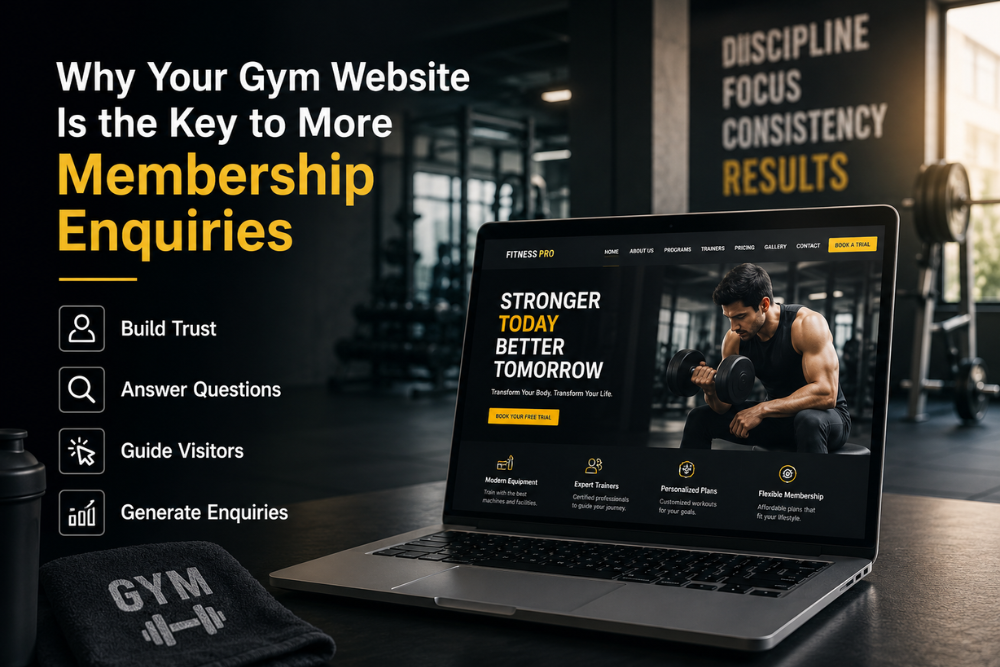
This is why high-performing gym websites are designed around more than appearance alone. They focus on building trust, answering questions, reducing hesitation, and making it easy for visitors to take the next step. Similar principles are explored in Gym Website Design in Delhi: Get More Membership Enquiries, where website structure, user experience, and lead generation work together to support long-term membership growth. Understanding how these elements influence user behavior helps explain why some gym websites consistently generate leads while others struggle despite receiving traffic.
Why Many Gym Websites Fail to Generate Consistent Membership Enquiries
Many gym owners believe that having a website automatically leads to new memberships. However, attracting visitors and generating enquiries are two very different things. A website may receive traffic from Google, social media, or local searches, but if it does not create trust, answer important questions, and guide visitors toward action, potential members often leave without making contact. This is one of the main reasons some gyms consistently generate trial bookings while others struggle despite offering similar facilities and services.
The problem usually begins with how information is presented. Many gym websites focus heavily on describing equipment, workout programs, or business achievements but overlook what potential members are actually looking for. Visitors want to understand whether the gym matches their goals, what kind of support they can expect, how membership works, and why they should choose that gym over other options. If finding these answers requires too much effort, users often continue comparing competitors instead of enquiring.
In today's competitive fitness market, people rarely make decisions after visiting just one website. They compare multiple gyms, evaluate credibility, and look for the option that feels most trustworthy and convenient. This is why successful fitness businesses focus on creating websites that do more than display information. They create a clear user journey that builds confidence, removes hesitation, and encourages visitors to take the next step. When a website is designed around member behavior rather than business preferences, it becomes far more effective at generating consistent membership enquiries and trial bookings.
How Potential Members Evaluate Gyms Before Making Contact
Choosing a gym is rarely an impulsive decision. Before enquiring about memberships or booking a trial session, most people spend time researching their options online. They compare facilities, explore fitness programs, review trainer credentials, and evaluate which gym appears most capable of helping them achieve their goals. In many cases, a potential member forms an opinion about a gym long before visiting the facility in person.
When users land on a gym website, they are looking for reassurance as much as information. They want to understand what type of experience they can expect, whether the gym aligns with their fitness objectives, and how easy it will be to get started. Factors such as membership options, personal training services, gym facilities, success stories, testimonials, location convenience, and contact accessibility all influence their decision-making process. If this information is presented clearly, visitors feel confident moving forward. If it is difficult to find or poorly organized, they often continue comparing other gyms.
This is why website structure has a direct impact on membership enquiries. A well-organized website helps users find answers quickly, reduces uncertainty, and creates a smoother decision-making experience. Similar principles are discussed in How Website Structure Affects SEO and Lead Generation for Businesses, where content organization and user experience play an important role in how visitors engage with a website and whether they eventually become enquiries. In a competitive fitness market, the gyms that make information easy to access often create stronger first impressions and generate more membership opportunities over time.
Why a Website Often Influences Membership Decisions More Than Social Media
Social media platforms such as Instagram and Facebook are excellent for attracting attention, showcasing transformations, and building a fitness community. However, when someone becomes seriously interested in joining a gym, they usually need more information before making a decision. At that stage, social media alone is rarely enough. Potential members want to compare membership options, understand available programs, evaluate trainer expertise, and determine whether the gym feels like the right fit for their goals.
This is where a website becomes significantly more important. Unlike social media profiles, a website allows visitors to explore information in a structured way without distractions. They can review services, learn about trainers, view facilities, read testimonials, and contact the gym when they feel ready. Similar user-focused principles are discussed in Why Businesses With Better Website Experience Rank Higher on Google, where website experience directly influences engagement, trust, and decision-making. While social media often introduces a business, the website is usually where confidence is built and membership decisions begin to take shape.
What Encourages a Visitor to Become a Membership Enquiry?
Generating membership enquiries is not about convincing every visitor to join immediately. Instead, it is about removing hesitation and making the next step feel simple. When potential members arrive on a gym website, they are looking for reassurance that they have found a place capable of helping them achieve their fitness goals. The easier it is for them to find answers, the more likely they are to make contact.
High-performing gym websites guide visitors naturally through the decision-making process. They provide clear information, build trust through social proof, and create multiple opportunities for engagement without feeling aggressive or sales-focused. Rather than forcing users to search for details, they present information in a way that feels effortless and intuitive.
Several factors commonly influence whether a visitor becomes an enquiry:
Clear membership and pricing information
Strong and visible calls-to-action
Simple contact and enquiry options
Trainer profiles and qualifications
Member testimonials and success stories
Professional facility photographs
Trial session booking opportunities
Transparent communication and policies
When these elements work together, the website creates a smoother customer journey. Visitors feel informed, comfortable, and confident about taking the next step, which naturally increases membership enquiries and trial bookings over time.
Features That Help Generate More Gym Membership Enquiries
A visitor rarely joins a gym immediately after landing on a website. In most cases, they are still evaluating options, comparing facilities, and deciding which fitness center feels most aligned with their goals. This is why the best gym websites are designed to support decision-making rather than simply display information. Every section should help answer questions, build confidence, and make the next step feel straightforward.
The most effective gym websites create multiple opportunities for engagement throughout the user journey. Instead of forcing visitors to search for information, they make important details easy to access. Membership plans, trainer profiles, fitness programs, class schedules, transformation stories, testimonials, and trial booking options all contribute to a stronger experience. When users can quickly understand what the gym offers and how it can help them achieve their goals, they are far more likely to enquire.
Lead generation also depends on reducing friction. Clear enquiry forms, WhatsApp contact options, visible call-to-action buttons, and simple navigation help visitors move from interest to action without unnecessary effort. Similar conversion-focused principles are discussed in Website vs Landing Page: Which Generates More Leads for Small Businesses, where user intent and website structure directly influence enquiry generation. For gyms, the goal is not simply to attract visitors but to create an environment where taking the next step feels natural and effortless.
Why Mobile Users Generate a Large Percentage of Gym Enquiries
The way people search for gyms has changed significantly. Potential members often discover fitness centers while using their smartphones during commutes, work breaks, or while exploring local options in their area. Because these searches happen in real-world situations, users expect fast access to information and immediate answers to their questions.
A poor mobile experience can quickly reduce interest, even if the gym itself offers excellent facilities and services. Visitors should be able to browse membership options, view trainer information, explore fitness programs, and contact the gym without zooming, excessive scrolling, or navigating complicated menus. If the website feels difficult to use, users often abandon it and continue evaluating competitors.
Mobile optimization is no longer just a technical requirement. It directly affects how people interact with the business. A smooth mobile experience helps visitors stay engaged longer, explore more pages, and complete enquiry forms more comfortably. For fitness businesses competing in crowded local markets, these small improvements often have a measurable impact on membership enquiries and trial bookings over time.
Why Local Visibility Plays a Critical Role in Gym Membership Enquiries
Unlike many businesses that can serve customers from different cities or even different countries, gyms depend heavily on local demand. Most people prefer fitness centers that are close to their home, workplace, or daily commute route. Because of this, a gym's ability to appear in local search results often has a direct impact on membership growth. No matter how good the facilities, trainers, or fitness programs may be, potential members cannot enquire if they never discover the business during their search.
Today, the journey usually begins online. Before visiting a gym, people search for nearby options, compare facilities, read reviews, and evaluate which business appears most professional and trustworthy. Searches such as gym near me, fitness center in Delhi, best gym in my area, and personal trainer near me often indicate strong buying intent because the user is actively looking for a solution rather than casually browsing. During this stage, a website becomes one of the most important factors influencing how the gym is perceived.
A strong local presence requires more than simply appearing on Google. Once a visitor reaches the website, the experience must support their decision-making process. Membership options, trainer information, fitness programs, testimonials, contact details, and trial booking opportunities should be easy to find and understand. Similar concepts are discussed in How Google Ranks Local Business Websites in Delhi, where website relevance, user experience, and content quality contribute to both visibility and engagement.
For fitness businesses, local search visibility and website performance work together. One helps potential members find the gym, while the other helps convert that interest into an enquiry. When both elements are aligned, gyms are often able to attract more qualified visitors, increase trial bookings, and create a more consistent flow of membership enquiries over time.
Why High-Growth Fitness Businesses Invest in Better Websites
The fitness industry has become increasingly competitive, making it more difficult for gyms to rely solely on word-of-mouth referrals or social media activity to attract new members. Today's consumers have more options than ever, and most of them begin their search online. Before visiting a facility or requesting membership information, potential members compare multiple gyms, evaluate services, review testimonials, and form opinions based on the experience each website provides. In many cases, a website influences the decision long before any direct interaction takes place.
This is one of the reasons successful fitness businesses invest heavily in improving their online presence. They understand that a website is not simply a marketing tool—it is part of the sales process. A well-structured website helps visitors understand membership options, explore fitness programs, learn about trainers, and build confidence in the business. When information is easy to access and the user experience feels intuitive, potential members are far more likely to engage with the gym and take the next step.
High-growth gyms also recognize that customer expectations continue to evolve. People expect fast-loading websites, mobile-friendly browsing, clear communication, and simple enquiry options. If a competitor provides a smoother experience, visitors often choose the easier option. Similar concepts are explored in How Website Helps Local Business Grow, where a website's ability to improve visibility, trust, and customer engagement directly contributes to business growth. The same principle applies to fitness businesses competing for attention in an increasingly crowded market.
Rather than viewing a website as a one-time expense, successful gyms see it as a long-term business asset. It supports membership enquiries, strengthens credibility, improves customer experience, and creates opportunities for growth long after it has been launched. Over time, these advantages help fitness businesses attract better-quality leads, generate more trial bookings, and build a stronger foundation for sustainable membership growth.
The Difference Between a Basic Gym Website and a Membership-Generating Website
Many gym owners assume that having a website is enough to attract new members. In reality, the results a website produces depend on how it is designed and structured. A basic website may provide information about the gym, but it often does little to guide visitors toward taking action. A membership-focused website, on the other hand, is built around user behavior, trust, and conversion. It helps potential members find answers quickly, evaluate the gym confidently, and move naturally toward making an enquiry or booking a trial session.
Basic Gym Website
Membership-Focused Gym Website
Displays basic company information
Designed to generate membership enquiries
Limited details about programs and services
Detailed fitness programs and membership information
Generic layout and messaging
Conversion-focused structure and content
Basic mobile functionality
Mobile-optimized user experience
Few trust-building elements
Testimonials, reviews, and success stories
Limited contact options
Multiple enquiry and trial booking opportunities
Acts as an online brochure
Functions as a lead-generation tool
The difference is rarely about appearance alone. Many gyms invest in attractive designs but overlook the factors that actually influence membership decisions. Visitors want clarity, convenience, and confidence before making contact. A website that answers questions, reduces uncertainty, and provides a simple path to enquiry often performs significantly better than one that only focuses on visual presentation. Over time, these improvements can contribute to more trial bookings, stronger engagement, and a more consistent flow of membership enquiries.
Frequently Asked Questions
How can a gym website help generate more membership enquiries?
A professionally designed gym website helps potential members learn about your facilities, fitness programs, trainers, and membership options before making contact. By providing clear information and an easy enquiry process, a website can significantly improve membership enquiries and trial bookings.
What features should a gym website include to attract new members?
An effective gym website should include membership information, trainer profiles, fitness program pages, testimonials, transformation stories, class schedules, enquiry forms, and mobile-friendly design. These features help visitors evaluate the gym and make informed decisions.
Why do some gym websites get more enquiries than others?
The difference often comes down to user experience, trust, and website structure. Gyms that make information easy to access, showcase credibility, and provide clear calls-to-action generally generate more enquiries than websites that create confusion or require visitors to search for important details.
Is a mobile-friendly website important for fitness businesses?
Yes. Many potential members search for gyms using smartphones. A mobile-friendly website ensures visitors can browse membership plans, view services, and submit enquiries easily from any device, improving both engagement and conversion opportunities.
Can SEO help a gym attract more local members?
SEO helps a gym appear in Google search results when people look for fitness services in their area. Better visibility increases the chances of attracting targeted visitors who are actively searching for gym memberships, personal training, or fitness programs.
How often should a gym website be updated?
A gym website should be updated regularly to keep membership information, class schedules, trainer details, testimonials, and promotional offers accurate. Regular updates also help improve website performance, security, and overall user experience.
Final Thoughts
Generating more gym memberships is no longer just about offering modern equipment, experienced trainers, or competitive pricing. Before visiting a fitness center, most potential members spend time researching their options online, comparing facilities, evaluating credibility, and deciding which gym appears most capable of helping them achieve their goals. During this process, the website often becomes one of the most influential factors shaping their decision. A gym that provides a clear, professional, and user-friendly online experience is often in a much stronger position to attract enquiries than one that relies solely on social media or traditional marketing.
A high-performing gym website does far more than display information. It helps build trust, showcase expertise, highlight fitness programs, and guide visitors toward taking action. From mobile responsiveness and fast-loading pages to enquiry forms, testimonials, and trial booking opportunities, every element contributes to the overall member journey. As competition within the fitness industry continues to increase, businesses that invest in a professional website gain a valuable advantage by improving visibility, strengthening credibility, and creating more opportunities for membership growth.
Ultimately, the most successful gym websites are built around user needs rather than business assumptions. They remove confusion, answer important questions, and make it easy for potential members to move from interest to enquiry. When a website consistently supports trust, engagement, and conversion, it becomes more than an online presence—it becomes a long-term business asset that helps generate membership enquiries, trial bookings, and sustainable growth over time.