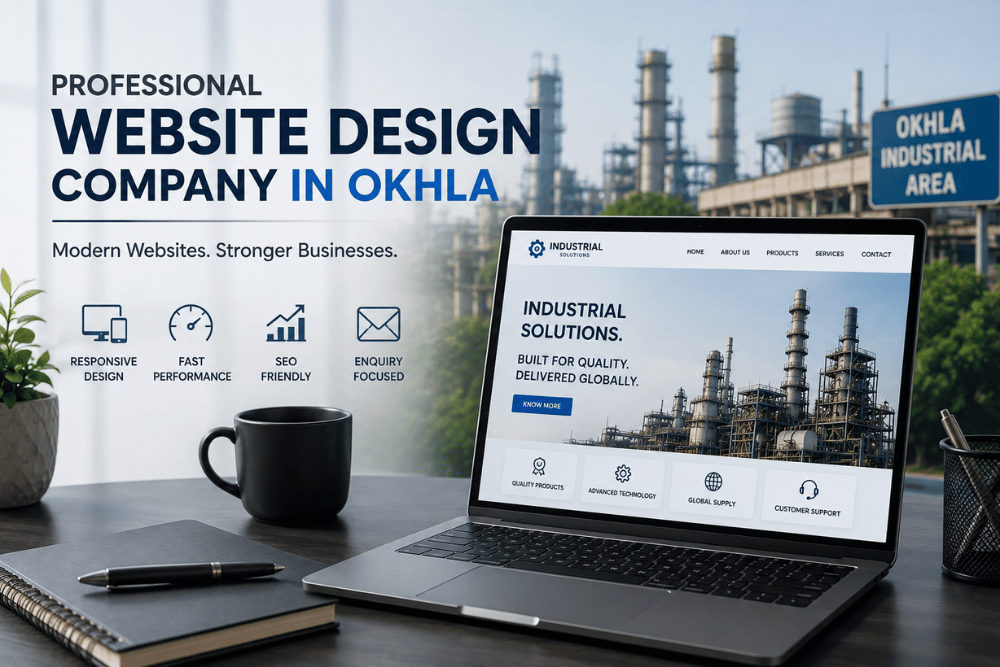
Website Designing Company in Okhla | Web Design Services
15 Aug, 2026
Okhla has a strong business presence, with manufacturers, exporters, industrial companies, B2B suppliers, professional firms, and local service providers competing for attention both locally and beyond Delhi. For many of these businesses, a website is often the first place a potential customer checks before making an enquiry. Buyers may want to explore products, distributors may review company capabilities, and service customers may simply want to understand what the business offers and how they can get in touch. A professional website therefore needs to create confidence quickly while presenting the business clearly.
The right website should be built around the way customers actually research and make decisions. A manufacturer may need organized product categories, specifications, applications, and enquiry options, while an exporter may need to present its products, capabilities, markets, and business information clearly to potential buyers. Service businesses may need focused service pages, local information, trust-building content, and simple contact options. A professionally planned website brings these elements together through responsive design, clear navigation, useful content, fast performance, and an SEO-friendly structure rather than relying on a generic template.
This is why choosing an experienced Website Designing Company in Okhla matters. The objective should not be simply to create an attractive website, but to build a digital platform that supports visibility, credibility, and enquiries as the business grows. A well-structured website makes important information easier for customers to find, gives search engines clearer context about the business, and creates natural opportunities to guide visitors toward contacting the company. For businesses competing in Okhla's commercial market, that combination of professional presentation, usability, and search-friendly development can make the website a much more valuable business asset.
Website Design for Manufacturers and Export Businesses
For manufacturers and export businesses in Okhla, a website needs to do more than display a company name, address, and a few photographs. Potential buyers, distributors, procurement teams, and business partners often visit the website before sending an enquiry, so they need to understand what the company actually offers without having to search through confusing menus or lengthy pages. Product categories, manufacturing capabilities, industries served, applications, company information, and contact options should be presented in a clear order that helps visitors quickly decide whether the business is relevant to their requirements.
Product presentation is particularly important for industrial businesses. Instead of placing every product on one crowded catalogue page, a better website can organize products into logical categories and provide detailed pages for important products or product groups. These pages can include photographs, specifications, applications, available options, industries served, and enquiry buttons. This structure makes the website easier for potential buyers to explore while also giving search engines clearer information about the company’s products and services. For export businesses, the same approach can be extended to manufacturing capabilities, quality information, certifications, markets served, and international enquiry requirements.
The website should also match the way the business operates. A manufacturer may need a product-focused catalogue, while an industrial service provider may need detailed service pages, project information, technical capabilities, and enquiry forms. An exporter may need stronger presentation of product ranges, production capacity, quality standards, and business credentials. This is why a professionally planned website should be built around the actual business rather than forcing every company into the same template. If the business requires more flexibility, custom website development can also be considered for specialized catalogues, enquiry systems, integrations, or other functionality.
A good industrial website should also be prepared for future growth. Products change, categories expand, new services are introduced, and businesses may begin targeting additional industries or markets. A scalable structure makes these changes easier while keeping navigation understandable for visitors. The result is a website that feels professional, communicates technical information clearly, supports search visibility, and gives potential customers a straightforward path from researching the company to making an enquiry.
What Makes a Professional Website Valuable for Okhla Businesses?
For a business in Okhla, a professional website should do more than display a company name, address, and a few service pages. It should help a visitor understand the business quickly, find the information relevant to their needs, and move naturally toward an enquiry. This is particularly important for manufacturers, exporters, industrial suppliers, B2B companies, and service providers, where customers may compare several businesses before deciding whom to contact. A clear website structure can make that decision easier by presenting products, services, capabilities, applications, company information, and contact options in a logical order.
A strong business website usually combines several practical elements rather than depending only on visual design:
Clear and easy-to-follow navigation
Dedicated product or service pages
Mobile-friendly responsive layouts
Fast-loading pages and optimized images
Prominent enquiry and contact options
Useful, well-structured business information
SEO-friendly page and content structure
Consistent branding across the website
Good design should also make complex information feel simple. An industrial company may have dozens of products, technical services, or customer categories, but visitors should not have to navigate through an overcrowded menu to find what they need. Proper page hierarchy, readable content, relevant visuals, sensible spacing, and well-placed calls to action help create a smoother experience while keeping the website professional. This is where an experienced Website Designing Company in Delhi can bring broader design, development, SEO, and user-experience expertise into the project.
The technology chosen for the website should also match the business rather than being selected simply because it is popular or inexpensive. A small company may need a straightforward business website, while a growing manufacturer or B2B company may require product catalogues, custom enquiry systems, integrations, or additional functionality in the future. The right development approach gives the business room to expand without forcing the website into unnecessary limitations. Ultimately, professional web design is valuable when it makes the business easier to understand, easier to trust, easier to find, and easier to contact.
A Website Should Be Built Around Enquiries
For an industrial or commercial business, the real purpose of a website is not simply to attract visitors. It should help the right visitors understand the company, evaluate its products or services, and take the next step when they are ready to start a conversation. A manufacturer may need quotation requests, a supplier may need product enquiries, while an exporter may want buyers to submit requirements from different markets. Because these actions are directly connected to business growth, enquiry opportunities should be planned into the website structure from the beginning rather than added as an afterthought.
The content and design should naturally support that journey. Product and service pages need to answer the questions potential customers are likely to have, while useful information such as specifications, applications, capabilities, certifications, project experience, and business details can build confidence before someone makes contact. Clear enquiry buttons, short forms, click-to-call options, and WhatsApp access can then provide an easy next step without making the website feel overly sales-focused. Businesses should also avoid common website conversion mistakes that make visitors work too hard to understand an offer or find a way to contact the company.
The same experience must work smoothly on mobile devices, where visitors may want to call, send a message, or submit an enquiry immediately. Fast-loading pages, readable content, simple navigation, responsive layouts, and accessible contact options can remove unnecessary friction from the customer journey. When the website connects useful information with a clear path to action, it becomes much more than an online brochure—it becomes a practical business platform that supports credibility, search visibility, customer research, and genuine enquiries.
SEO-Friendly Website Structure
For a business website in Okhla, SEO should begin with the way the website is planned, not after the design and development are finished. Visitors should be able to understand what the company does, explore relevant products or services, find supporting information, and reach the business without moving through a confusing maze of pages. This is especially important for manufacturers, exporters, industrial companies, and B2B businesses, where the website may need to cover multiple product categories, applications, industries, capabilities, and commercial services. A well-organized structure gives every important topic an appropriate place while keeping the overall experience simple for the visitor.
A strong website architecture normally starts with the main business pages and then moves into more specific topics. A manufacturer, for example, may have separate sections for product categories, individual products, industries served, applications, company capabilities, and enquiries. A service business may need dedicated pages for its major services rather than placing everything on one generic page. This approach gives each page a clear purpose and creates more opportunities to provide useful information for specific searches. It also helps avoid the common problem of creating many pages that are almost identical simply because different keywords are being targeted. For businesses planning a complete site structure, reviewing what pages every business website must have can help establish a stronger foundation before adding more specialized pages.
The SEO elements should then support this structure naturally. Page titles, headings, URLs, written content, images, navigation, and internal links should all communicate what each page is about without forcing keywords into places where they do not belong. A product page should focus on that product, a service page should explain that service, and an industry page should address the needs of that particular audience. This creates a clearer relationship between search intent and page purpose. It also gives the website room to build useful topical depth instead of relying on repetitive content across multiple URLs.
Internal linking should follow the same logic. Links are most valuable when they help a visitor continue their research. A product page might lead to a related application page, an industry page may point to a relevant service, and an informational article can introduce a related commercial page when the reader is likely to need it. The goal is not to place links everywhere, but to create sensible paths through the website. Good navigation and contextual linking work together to help visitors discover information more easily, which is why how website navigation affects customer decisions and business leads is closely connected to both usability and conversion-focused website planning.
A well-planned architecture also gives an Okhla business room to grow without repeatedly rebuilding its website. New products, services, industries, case studies, FAQs, and educational content can be added within an existing structure instead of creating disconnected pages whenever the business expands. Over time, this creates a website that is easier for customers to explore, easier for search engines to understand, and more useful as a long-term source of organic traffic and business enquiries.
Mobile-Friendly Design, Speed and User Experience
For businesses in Okhla, a website needs to work well in the situations where customers actually use it. A buyer may discover a manufacturer through Google, open a product page from a shared link, or check a company profile from a smartphone before deciding whether to make an enquiry. If the website takes too long to load, the content is difficult to read, or important buttons are hard to use, the quality of the business can be judged negatively even when the company itself is well established. Good website design removes this friction by making the experience clear and comfortable from the first page to the final enquiry.
Area
Good Practice
Mobile
Responsive layouts and easy-to-use menus
Speed
Optimized images, code and page resources
Navigation
Clear routes to products, services and contact
Content
Readable presentation of detailed information
Enquiries
Simple forms, calls and WhatsApp options
For manufacturers and exporters, performance can become particularly important because industrial websites often contain large product images, specifications, catalogues, technical documents, galleries, and enquiry forms. These elements are useful, but they should not be allowed to make the website unnecessarily heavy. Images can be properly optimized, unnecessary scripts can be reduced, and page elements can be structured so that visitors can reach the most important information quickly. Businesses reviewing their existing website can also look at website speed optimization to understand where performance improvements may be needed.
User experience goes beyond making a website responsive. A visitor should immediately understand what the company does, where to find relevant products or services, and what action to take next. A procurement manager may want specifications, an exporter may want company capabilities, and a local customer may simply want a phone number or service detail. The website should support these different journeys instead of forcing every visitor through the same path. Clear headings, sensible page hierarchy, readable content, useful imagery, straightforward navigation, and well-placed enquiry options all help achieve this.
A professionally designed website also needs to maintain this experience as the business grows. Adding new products, service pages, images, or resources should not make the website slower or turn the navigation into a confusing collection of links. Good planning considers performance and usability from the beginning, so the website remains practical as more content is added. For an Okhla business competing for attention online, this combination of speed, mobile usability, clear structure, and easy interaction can make the difference between a visitor who simply views a page and one who stays long enough to become a genuine business enquiry.
Choosing the Right Website Designing Company in Okhla
Choosing a website designing company in Okhla should involve more than comparing homepage designs or selecting the lowest quotation. For a manufacturer, exporter, industrial company, or B2B business, the website may become an important part of how buyers evaluate the company before making an enquiry. The right development team should therefore understand the business, its customers, products or services, and the action the website is expected to generate. A good website is not simply attractive; it should communicate the business clearly, make important information easy to find, work reliably across devices, and provide a strong foundation for future growth.
The first thing to evaluate is whether the company takes time to understand the business before discussing design. A manufacturer may need detailed product categories, specifications, applications, certifications, and quotation options. An exporter may need stronger presentation of product ranges, capabilities, markets, and international enquiries. A professional service company may require service-specific landing pages, local visibility, reviews, and direct contact options. These are very different requirements, so a website built from a generic template without understanding the customer's journey may look polished but still fail to support the actual business.
Technical planning is equally important. Before choosing a development company, businesses should understand how the website will be built, how it will perform on mobile devices, whether the structure can support additional pages, and how easily the site can be maintained after launch. Website speed, responsive design, clean URLs, navigation, image optimization, security, backups, and update procedures should be discussed before development begins. It is also worth asking what happens after the website goes live because ongoing maintenance and technical support can become important as the business adds products, changes information, or expands its online presence.
SEO should not be treated as something that can simply be added after the website is finished. A strong development process considers search-friendly architecture from the beginning, including meaningful page structures, logical headings, useful content, descriptive URLs, internal linking, image optimization, and clear relationships between related pages. This gives the website a stronger foundation for future content and organic visibility. Businesses comparing providers can also use this practical guide on how to choose the right website designing company in Delhi to evaluate important factors before making a decision.
Finally, businesses should judge a website company by how well it connects design with commercial goals. A visually impressive website is not particularly useful if visitors cannot understand the services, find the products they need, or contact the company easily. The stronger approach is to create a website where design, content, performance, SEO, navigation, and enquiry generation support one another. For an Okhla business competing for buyers and customers online, that kind of website can become a long-term digital asset rather than simply another company profile on the internet.
Closing Thoughts
For businesses in Okhla, a professional website should do more than establish an online presence. It should help potential buyers, customers, distributors, and business partners understand the company, explore its products or services, and decide whether to make an enquiry. This is particularly important for manufacturers, exporters, industrial companies, B2B businesses, and service providers where customers may need detailed information before starting a conversation. A well-planned website brings that information together through clear pages, useful content, professional presentation, mobile-friendly design, and a straightforward enquiry journey.
The real value of professional web design comes from how well everything works together. Fast performance, responsive layouts, logical navigation, SEO-friendly structure, useful product or service pages, and simple contact options should support the same business goal rather than functioning as isolated features. For a company competing in Okhla, the website should also be flexible enough to accommodate new products, services, content, and future marketing efforts without becoming difficult to manage. When the website is built around real customer needs and long-term business objectives, it becomes more than a digital brochure—it becomes a reliable platform for visibility, credibility, enquiries, and sustainable online growth.
Yes. Website projects can be designed for businesses operating in and around Okhla, including manufacturers, exporters, industrial companies, B2B businesses, service providers, and other local businesses. The website structure can be planned around the company’s products, services, target customers, and enquiry goals.
Yes. A manufacturing website can be structured around product categories, manufacturing capabilities, applications, industries served, company information, product galleries, and enquiry sections. The aim is to present technical business information clearly while making it easy for potential buyers to contact the company.
Yes. B2B websites often need a different structure from ordinary business websites because visitors may be looking for detailed product information, specifications, capabilities, industries served, and direct enquiry options. The design can be organized to make this information easy for buyers and business decision-makers to find.
Yes. An export-focused website can present products, company capabilities, markets served, export information, certifications where applicable, and enquiry details in a professional structure. The website can also be designed to provide a clear experience for buyers researching the company from outside the local market.
Yes. Businesses with large product ranges or multiple services can use separate categories and dedicated pages to organize their offerings. This makes the website easier to browse and gives potential customers a clearer understanding of the products or services that are relevant to their requirements.
Yes. A business website can be structured around enquiry generation rather than simply displaying company information. Product or service pages, prominent enquiry options, contact forms, click-to-call functionality, WhatsApp options, and clear calls to action can be positioned around the visitor journey to make contacting the business easier.
Grow Your Local Business
Get a Professional Website From a Web Designing Company in Delhi