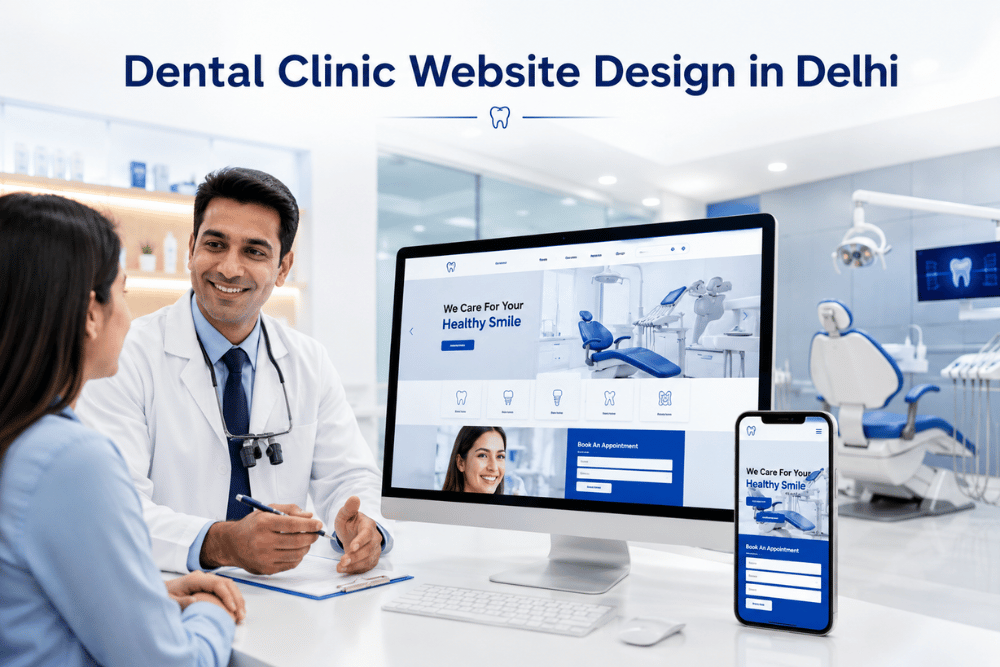
Dental Clinic Website Design in Delhi – Get More Patient Appointments
10 Jun, 2026
Patients rarely choose a dentist without doing some research first. Whether they need routine dental care, cosmetic treatments, dental implants, or orthodontic services, most people search online to compare clinics, read reviews, evaluate credibility, and learn more about available treatment options. In many cases, the decision to contact a clinic is influenced by the quality of its website long before a phone call or appointment request is made.
This is why Dental Clinic Website Design in Delhi has become increasingly important for modern dental practices. A professional website helps patients understand treatments, explore clinic information, learn about the dental team, and book appointments with confidence. Beyond patient convenience, a well-designed dental clinic website also strengthens trust, improves online visibility, and supports long-term patient acquisition.
As competition continues to increase across Delhi, clinics that invest in a modern, mobile-friendly website are often in a stronger position to attract new patients and generate more appointment bookings. A professionally developed website is no longer just a marketing asset—it has become an essential part of growing and managing a successful dental practice.
Why Modern Dental Clinics Need a Professional Website
Patient behavior has become increasingly digital, and this shift has changed how dental clinics attract and engage potential patients. Whether someone is searching for routine dental care, cosmetic dentistry, orthodontic treatment, dental implants, or emergency services, their journey often begins online. Before choosing a clinic, many patients compare multiple options by visiting websites, reading reviews, exploring treatment information, and evaluating the overall professionalism of a practice. In many cases, a website creates the first impression long before a patient decides to call or book an appointment.
A professional dental clinic website helps build confidence during this decision-making process. When visitors can easily access information about treatments, clinic facilities, dentist profiles, appointment options, and patient testimonials, they are more likely to trust the clinic and take the next step. A well-structured website also helps patients find answers to common questions, reducing uncertainty and making the appointment process more convenient.
Beyond patient trust, a website plays an important role in online visibility. Search engines evaluate website quality, content relevance, user experience, and technical performance when deciding which businesses appear in search results. Understanding how Google evaluates business websites before ranking them can help explain why professionally designed websites often perform better than outdated or poorly structured alternatives. As competition continues to grow across Delhi, clinics that invest in a modern dental website are often better positioned to attract patients, improve engagement, and support long-term practice growth.
Why Dental Clinics in Delhi Are Investing More in Professional Websites
The healthcare industry in Delhi has become increasingly competitive over the past few years. From independent dental practices and specialized treatment centers to multi-speciality clinics, patients now have more options than ever before. As a result, clinics can no longer rely solely on referrals and offline marketing to attract new patients. Many people begin their search online, comparing clinics, reading reviews, exploring treatment options, and evaluating credibility before making a decision.
Growing demand for cosmetic dentistry, dental implants, orthodontic treatments, and preventive dental care has also increased competition across the city. Patients expect convenient access to information, online appointment booking options, and a professional digital experience when researching healthcare providers. A clinic's website often becomes the first point of interaction during this process.
This is one reason many practices are investing in professional healthcare website design solutions that help improve visibility, strengthen trust, and support patient acquisition. As online search behavior continues to influence healthcare decisions, clinics with a modern and user-friendly website are often better positioned to attract enquiries and generate more appointment bookings.
How Patients Search for Dentists Today
The process of finding a dentist has changed dramatically over the past decade. While personal recommendations and word-of-mouth referrals still influence decisions, many patients now begin their search online. Before booking an appointment, people often compare multiple clinics, explore treatment options, read patient reviews, and evaluate the credibility of dental professionals. This research phase plays an important role in helping patients feel confident about their choice.
Common searches performed by potential patients include:
Dentist near me
Dental clinic in Delhi
Cosmetic dentist in Delhi
Dental implants specialist
Teeth whitening clinic
Orthodontist near me
Emergency dental treatment
Pediatric dentist in Delhi
Root canal treatment near me
These searches often indicate strong intent because the user is actively looking for a solution rather than casually browsing. If a dental clinic appears in search results during this stage and provides a professional online experience, the chances of generating an enquiry or appointment increase significantly. This is one reason many clinics invest in both website development and search visibility strategies to improve their digital presence.
Appearing in search results is only the first step. Once patients visit a website, they expect clear treatment information, easy navigation, online appointment options, and reassurance that they are dealing with a trusted healthcare provider. Similar challenges are discussed in why local businesses in Delhi need SEO, where online visibility increasingly influences how customers discover and evaluate service-based businesses. Clinics that combine strong search visibility with a professional website are often better positioned to attract new patients and generate consistent appointment bookings over time.
What Makes a Dental Clinic Website Effective?
A dental clinic website should do more than simply provide information about treatments and contact details. Patients often visit a clinic's website because they are looking for reassurance before making an important healthcare decision. They want to understand the services available, learn about the qualifications of the dental team, explore the clinic environment, and feel confident that they are choosing a trustworthy provider. A website that successfully addresses these concerns can have a significant impact on whether a visitor decides to book an appointment or continue searching elsewhere.
The most effective dental websites are designed around the patient journey. Instead of forcing visitors to search through multiple pages, important information should be easy to access and clearly presented. Treatment details, dentist profiles, patient testimonials, appointment options, and contact information should work together to create a seamless experience. When patients can quickly find answers to their questions and understand what to expect, they are more likely to develop confidence in the clinic and take the next step.
Website effectiveness is also closely connected to usability. A visually attractive design alone is rarely enough to generate appointments if visitors struggle to navigate the site or complete simple actions. Factors such as page organization, mobile responsiveness, loading speed, and clear calls-to-action all contribute to how patients interact with a website. Similar principles can be seen in what pages every website must have, where proper structure helps visitors find information more efficiently while supporting stronger engagement and conversion opportunities.
Essential Features Every Dental Clinic Website Should Include
A dental clinic website should do much more than present basic information about the practice. Patients often visit a website while researching treatment options, comparing clinics, and deciding whether they feel comfortable booking an appointment. During this process, they expect quick access to relevant information, a professional presentation, and a smooth browsing experience. If a website is difficult to navigate, lacks important details, or creates confusion, potential patients may leave and continue their search elsewhere. This is why the features included on a dental website can directly influence both patient trust and appointment generation.
A professionally designed dental clinic website should combine functionality, convenience, and usability to support the needs of modern patients. Some of the most valuable features include:
Mobile-friendly and responsive design
Online appointment booking functionality
Detailed treatment and service pages
Dentist profiles and qualifications
Patient testimonials and reviews
Google Maps integration
Click-to-call functionality
Contact and enquiry forms
Fast website loading speed
SSL security and secure browsing
Before-and-after treatment galleries
Frequently asked questions section
Each of these features plays a role in improving the overall patient experience. Treatment pages help visitors understand available services, while dentist profiles and testimonials help build credibility. Mobile responsiveness ensures patients can browse comfortably on any device, and appointment booking features reduce friction when someone is ready to take action. Together, these elements create a website that not only looks professional but also supports patient engagement throughout the decision-making process.
The most effective dental websites focus on making the patient journey as simple as possible. Visitors should be able to find information quickly, understand treatment options clearly, and contact the clinic without unnecessary obstacles. When usability, trust, and convenience work together, a website becomes more than an online presence—it becomes a valuable tool for patient acquisition and lead generation, helping clinics attract more enquiries and increase appointment bookings over time.
Why Mobile-Friendly Design Matters
The way patients access healthcare information has changed significantly in recent years. A large percentage of dental-related searches now take place on smartphones, with people often researching treatments, comparing clinics, reading reviews, and booking appointments directly from their mobile devices. Whether someone is searching for emergency dental care, cosmetic dentistry, orthodontic treatment, or a nearby dental clinic, their first interaction with a practice is increasingly likely to happen on a mobile screen. If a website does not provide a smooth mobile experience, potential patients may leave before exploring services or making contact.
A mobile-friendly dental website automatically adapts to different screen sizes, ensuring that pages remain easy to read and navigate across smartphones, tablets, laptops, and desktop computers. Important information such as treatment details, clinic location, contact information, and appointment booking options should be accessible without excessive scrolling, zooming, or navigation difficulties. A responsive design not only improves convenience for patients but also helps create a more professional and trustworthy impression of the clinic.
Mobile usability also influences how search engines evaluate websites. Google prioritizes websites that deliver a positive experience across devices because user satisfaction plays an important role in search visibility. Similar principles are discussed in mobile-friendly website design, where accessibility, responsiveness, and user experience contribute to overall website performance. Clinics that invest in responsive website design are often better positioned to engage visitors, reduce bounce rates, improve patient enquiries, and increase appointment bookings over time.
How a Professional Website Helps Generate More Patient Appointments
Many dental clinics focus on increasing website traffic, but traffic alone does not generate appointments. The real objective is converting visitors into patients by creating a website experience that builds trust and makes decision-making easier. Before booking an appointment, most people want to understand available treatments, learn about the qualifications of the dentists, read patient reviews, explore clinic facilities, and determine whether the practice appears professional and reliable. If this information is difficult to find or the website feels outdated, potential patients may leave and continue searching for other options. A professionally designed dental clinic website helps remove these barriers by presenting information clearly and guiding visitors toward taking action.
The patient journey often begins long before a phone call is made. Every page should help visitors move closer to scheduling an appointment by providing useful information, clear navigation, and convenient contact options. Features such as online appointment booking, treatment pages, mobile responsiveness, patient testimonials, and visible calls-to-action all contribute to a better experience and stronger conversion opportunities. Similar principles can be seen in 10 website conversion mistakes, where small usability issues can have a significant impact on enquiries and overall website performance. Over time, a well-designed dental website becomes more than an informational resource—it becomes a valuable tool for attracting patients, increasing appointment bookings, and supporting long-term clinic growth.
Why Trust and User Experience Matter for Dental Clinics
Healthcare decisions are often based on trust. Unlike many other industries, patients are not simply comparing prices or features—they are choosing a healthcare provider responsible for their treatment and well-being. Before booking an appointment, many patients carefully evaluate multiple clinics by reviewing dentist qualifications, treatment information, patient testimonials, clinic facilities, and overall professionalism. A website often becomes the first opportunity to create this trust, and the quality of that experience can directly influence whether a patient decides to make contact.
Trust is built through a combination of factors rather than a single element. Professional dentist profiles, genuine patient reviews, before-and-after treatment examples, clinic photographs, secure website browsing, and transparent information all help reassure potential patients that they are dealing with a credible practice. At the same time, user experience plays an equally important role. A slow website, confusing navigation, missing treatment information, outdated design, or poor mobile usability can quickly reduce confidence, even if the clinic provides excellent dental care. Similar principles can be seen in website speed optimization, where website performance directly affects both user engagement and overall website effectiveness.
Many dental clinics focus primarily on attracting visitors while overlooking the experience those visitors have after arriving on the website. However, appointment generation often depends on removing obstacles that create hesitation during the decision-making process. When patients can easily find information, explore treatments, understand the clinic's expertise, and contact the practice without frustration, they are more likely to move forward with booking an appointment. A website that combines trust, usability, and convenience creates a stronger foundation for patient acquisition and long-term practice growth.
How Long Does It Take to See Results from a New Dental Website?
One of the most common questions dental clinic owners ask is how quickly a new website will start generating results. While certain improvements can be noticed immediately after launch, long-term growth usually develops gradually. A professionally designed website can instantly improve patient experience, make information easier to access, and create a stronger first impression. However, benefits such as increased search visibility, higher patient enquiries, and improved Google rankings typically require time as search engines evaluate the website and users begin interacting with it.
The timeline for results depends on several factors, including the competitiveness of the local market, the quality of the website content, the strength of local SEO efforts, and the overall online presence of the clinic. A website should be viewed as a long-term business asset rather than a short-term marketing campaign. Clinics that consistently improve their website, publish useful content, collect patient reviews, and strengthen their online visibility often experience better results over time.
Activity
Typical Timeframe
Website Launch & Improved User Experience
Immediate
Increased Patient Engagement
1–4 Weeks
More Website Enquiries
1–3 Months
Local SEO Improvements
2–6 Months
Stronger Google Visibility
3–6 Months
Competitive Search Rankings
6–12 Months
Many clinics notice improvements in enquiry quality before seeing major ranking increases. Patients often arrive with a better understanding of treatments, services, and clinic information because the website has already answered many of their questions. Over time, a stronger website combined with effective SEO can help increase visibility, generate more appointment requests, and support sustainable practice growth. Similar patterns can be seen in how long website development takes, where the overall process extends beyond launch and continues through optimization, improvement, and ongoing performance enhancements.
conversion-focused while keeping them concise.
Frequently Asked Questions
Why does a dental clinic need a professional website?
A professional website helps create a strong first impression and gives potential patients easy access to important information such as treatments, dentist profiles, clinic facilities, and appointment options. Since many patients research clinics online before making a decision, a well-designed website can improve trust, credibility, and patient acquisition.
Can a dental website help generate more patient appointments?
Yes. A professionally designed dental website helps patients understand available treatments, learn about the dental team, read reviews, and book appointments more easily. By reducing uncertainty and improving user experience, a website can become a valuable source of patient enquiries and appointment bookings.
What features should a dental clinic website include?
A dental clinic website should provide a smooth and informative experience for patients. Important features often include treatment pages, dentist profiles, online appointment booking, patient testimonials, contact forms, Google Maps integration, mobile responsiveness, fast loading speeds, and secure browsing.
Is mobile-friendly website design important for dental clinics?
Absolutely. A large percentage of patients search for dental services on smartphones and tablets. A mobile-friendly website ensures visitors can easily browse treatments, access contact information, and schedule appointments regardless of the device they are using.
Can a dental clinic website help improve Google visibility?
Yes. An SEO-friendly dental website helps search engines understand the clinic's services, location, and expertise. When combined with local SEO strategies, quality content, and a strong user experience, a website can improve visibility in search results and attract more potential patients.
How much does dental clinic website design cost in Delhi?
The cost depends on factors such as design complexity, number of pages, appointment booking functionality, content requirements, and customization needs. Basic dental websites generally require a lower investment, while advanced websites with custom features and SEO integration typically cost more.
Final Thoughts
The dental industry is becoming increasingly competitive as more patients research clinics online before making a decision. Whether they are looking for routine dental care, cosmetic treatments, orthodontic services, or dental implants, their journey often begins with a search engine and a clinic's website. This makes a strong digital presence more important than ever for practices that want to attract and convert potential patients.
Investing in professional dental clinic website design in Delhi is about much more than appearance. A well-designed website helps patients learn about treatments, understand the expertise of the dental team, explore reviews, and book appointments with confidence. When usability, trust, and accessibility work together, a website becomes a valuable asset for patient engagement and practice growth.
As patient expectations continue to evolve, clinics that invest in a modern website are often better positioned to improve visibility, generate enquiries, and create a stronger competitive advantage. A professional dental website is no longer simply an online presence—it is an important part of attracting new patients and supporting long-term success.