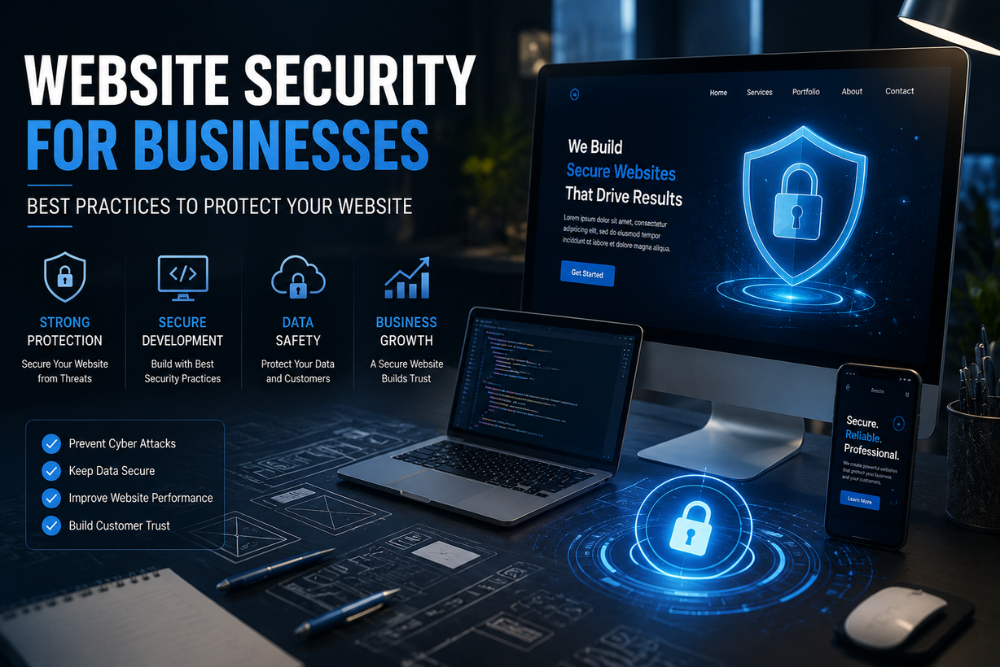
Website Security for Businesses: Best Practices to Protect Your Website
09 Jul, 2026
For many businesses, a website is more than just an online presence—it is a platform for generating enquiries, communicating with customers, processing transactions, and building credibility. As businesses continue to rely on their websites for daily operations, protecting them from security threats has become more important than ever. A single security incident can disrupt business operations, damage customer trust, and negatively affect search visibility.
Unfortunately, website security is often overlooked until something goes wrong. Many businesses focus on design, content, and marketing while assuming their website is secure by default. In reality, cyber threats continue to evolve, and even small security vulnerabilities can expose a website to malware, hacking attempts, data theft, or prolonged downtime.
A secure website protects much more than business data—it helps safeguard customer trust, website availability, and your business reputation. Achieving that level of protection requires regular software updates, secure development practices, continuous monitoring, and proactive maintenance. Rather than treating security as a one-time setup, businesses should make it an ongoing part of their overall Website Maintenance strategy.
A secure website not only reduces security risks but also improves customer trust, supports long-term website performance, and provides a stronger foundation for sustainable business growth.
Why Website Security Matters for Businesses
Website security affects almost every aspect of your online business, from customer trust and lead generation to search visibility and long-term website performance. Every visitor who fills out a contact form, makes a purchase, submits personal information, or browses your services expects their information to be handled securely. If visitors encounter browser security warnings, suspicious website behaviour, or technical issues, they are far less likely to trust your business, regardless of the quality of your products or services.
Security also influences how search engines evaluate your website. Search engines aim to provide users with safe browsing experiences, so websites affected by malware, hacking attempts, or other security issues may lose search visibility, display browser warnings, or even be temporarily removed from search results until the problems are resolved. Recovering from these issues often requires far more time, effort, and resources than preventing them through proactive security measures.
A secure website protects customer information, reduces the risk of malware and unauthorized access, supports better search visibility, minimizes costly downtime, and strengthens your business's reputation over time. These benefits not only improve website reliability but also help create the confidence that encourages visitors to become customers.
Website security should not be viewed as a one-time setup completed during development. As technology, security threats, and customer expectations continue to evolve, businesses should regularly review and strengthen their website's security measures. Search engines evaluate many technical factors before deciding how websites should rank, and website security is one of the signals that helps establish trust. Businesses interested in understanding this process can also read How Google Evaluates Business Websites Before Ranking Them, which explains how technical quality, user experience, and website reliability influence search visibility.
Common Security Threats Every Business Should Know
Many businesses assume cybercriminals only target large organizations, but small and medium-sized businesses are often more vulnerable because they typically have fewer security measures in place. Automated bots continuously scan websites looking for outdated software, weak passwords, insecure plugins, and other vulnerabilities that can be exploited. Understanding these common threats helps businesses take proactive steps to reduce security risks before they affect website performance, customer trust, or business operations.
Security Threat
How It Affects Your Website
Malware
Malicious software that can infect a website, display spam content, redirect visitors, steal information, or damage website functionality.
Brute Force Attacks
Automated login attempts that repeatedly guess usernames and passwords until unauthorized access is gained.
SQL Injection
Exploits insecure forms or databases to access, modify, or steal sensitive business and customer information.
Cross-Site Scripting (XSS)
Injects malicious scripts into webpages, allowing attackers to manipulate website content or steal visitor data.
DDoS Attacks
Overloads a website with excessive traffic, causing slow performance, downtime, or temporary unavailability.
Outdated Software
Older CMS versions, plugins, or themes often contain known vulnerabilities that attackers actively target.
Website security involves much more than installing antivirus software or using strong passwords. Protecting a business website requires a combination of secure hosting, regular updates, continuous monitoring, reliable backups, and proactive maintenance. When these measures work together, businesses significantly reduce the risk of security breaches while providing a safer and more reliable experience for their customers.
Essential Website Security Best Practices
Protecting a business website requires more than installing a security plugin or using a strong password. Effective website security combines secure development, reliable hosting, regular updates, continuous monitoring, and good security habits. While no website can guarantee complete protection against every cyber threat, following proven security practices significantly reduces security risks and helps maintain a safe, reliable online presence.
The following security practices form the foundation of a well-protected business website.
Security Practice
Why It Matters
Use HTTPS and SSL Certificates
Encrypts data between your website and visitors, protecting sensitive information while improving customer trust.
Keep Software Updated
Regular updates fix known security vulnerabilities before they can be exploited by attackers.
Use Strong Passwords
Strong, unique passwords help prevent unauthorized access and brute force attacks.
Enable Two-Factor Authentication
Adds an additional layer of protection for administrator and user accounts.
Create Regular Backups
Allows your website to be restored quickly if data is lost or a security incident occurs.
Detects unusual login attempts, malware, broken pages, and other potential security issues before they become serious.
Implementing these practices together creates multiple layers of protection. HTTPS secures customer data during transmission, software updates close security vulnerabilities, and strong passwords reduce the risk of unauthorized access. Regular backups provide a reliable recovery option if unexpected issues occur, while secure hosting strengthens the overall stability and security of the website.
Website security should also be considered during the planning and development stage rather than being treated as an afterthought. Businesses that follow a structured Website Development Process generally build websites with stronger security, better scalability, and fewer technical vulnerabilities because security, performance, and long-term maintenance are planned from the beginning.
Finally, website security is not something you configure once and forget. As new threats emerge and technologies continue evolving, regular monitoring remains essential. Reviewing login activity, checking SSL certificates, monitoring website uptime, scanning for malware, and identifying unusual traffic patterns helps businesses detect potential problems before they become serious. Regularly reviewing your website through tools such as Google Search Console and security monitoring solutions can also help identify technical issues, indexing problems, and security concerns before they begin affecting users or search visibility.
Control User Access to Reduce Security Risks
One of the simplest ways to improve website security is by limiting who can access your website and what they are allowed to do. Not every user needs full administrative privileges, and giving unnecessary permissions increases the risk of accidental changes, unauthorized access, or security vulnerabilities.
A good access management strategy assigns user roles based on responsibilities. Content writers, editors, developers, and administrators should each have only the permissions required to perform their work. Businesses should also review user accounts regularly, remove inactive users, and immediately revoke access when an employee or contractor no longer needs it. These small security practices help reduce risk while making the website easier to manage over the long term.
How Website Security Supports SEO and User Trust
Website security plays an important role in both search engine optimization and customer trust. Search engines aim to provide users with safe and reliable browsing experiences, which is why websites affected by malware, phishing attacks, or other security issues may lose visibility in search results or display browser warnings that discourage visitors from accessing the site.
Security also influences how visitors interact with your website. If users encounter HTTPS warnings, suspicious behaviour, or signs that a website may be compromised, they are far more likely to leave without exploring your services. This increases bounce rates, reduces enquiries, and weakens customer confidence. A secure website creates a safer browsing experience, helping visitors stay longer and interact with your business more confidently.
Although website security alone will not guarantee higher rankings, it supports many of the technical and user experience signals that search engines consider when evaluating websites. Businesses that ignore security issues often experience declining search visibility because technical problems gradually affect overall website quality. If your website is struggling to perform well in search results, Why Your Business Is Not Ranking on Google explains several technical and SEO factors that may be limiting your online visibility.
Common Website Security Mistakes Businesses Make
Many website security problems are not caused by advanced cyber attacks but by simple mistakes that are ignored over time. Businesses often focus on adding new features or updating content while overlooking basic security practices that protect their websites. These small oversights may seem harmless initially, but they can gradually increase the risk of malware, unauthorized access, data loss, and website downtime.
One common pattern I've noticed is that many businesses only start paying attention to website security after experiencing malware, unexpected downtime, or browser security warnings. By that stage, resolving the issue often requires significantly more time, effort, and cost than preventing it through regular maintenance and proactive security practices.
Some of the most common mistakes include:
Using weak or repeated passwords across multiple accounts
Delaying CMS, theme, or plugin updates
Ignoring regular website backups
Installing unnecessary plugins or third-party tools
Choosing unreliable or low-quality hosting
Giving multiple users full administrator access
Not enabling HTTPS and SSL certificates
Failing to monitor website activity regularly
Using outdated themes or website frameworks
Leaving inactive user accounts on the website
Preventing these mistakes does not require expensive security tools. In most cases, a consistent maintenance routine, timely software updates, secure hosting, and regular security reviews are enough to significantly reduce the risk of security incidents. Businesses that take a proactive approach to website security are generally better prepared to protect customer data, maintain website performance, and avoid costly disruptions.
Choosing the Right Website Development Partner
Website security doesn't begin after a website is launched—it starts during the planning and development process. The technologies used, coding standards followed, hosting environment selected, and overall development approach all play an important role in determining how secure a website will be over the long term.
An experienced website development company considers security throughout the project rather than treating it as an optional add-on. This includes writing clean and secure code, implementing HTTPS from the beginning, configuring reliable backups, keeping software updated, and following development practices that reduce potential security vulnerabilities.
Before selecting a web development company, it's worth evaluating more than just design quality or pricing. Review their previous projects, understand their development process, ask about website maintenance and post-launch support, and find out what security measures are included after the website goes live. Businesses that invest time in choosing the right development partner are far more likely to build a website that remains secure, reliable, and scalable as their business grows.
If you're comparing different agencies, How to Choose the Right Website Designing Company in Delhi explains the key factors businesses should consider before making a decision, from technical expertise and communication to long-term support and website quality.
Final Thoughts
Website security is no longer just an IT concern—it is an essential part of building a reliable, trustworthy, and successful online business. Every security measure, from using HTTPS and keeping software updated to choosing secure hosting and monitoring website activity, helps protect both your business and the customers who rely on your website.
Ignoring website security can lead to data loss, reduced customer confidence, lower search visibility, and costly downtime. On the other hand, businesses that invest in proactive security practices create a stronger foundation for long-term growth because their websites remain secure, stable, and dependable as technology and customer expectations continue to evolve.
Rather than waiting for a security issue to occur, businesses should make website security an ongoing part of their overall website management strategy. A secure, well-maintained website not only protects valuable business data but also supports better user experience, stronger customer trust, improved SEO performance, and sustainable business growth for years to come.
Website security is the process of protecting a website from cyber threats such as hacking, malware, unauthorized access, and data breaches. It involves regular updates, security monitoring, backups, and other best practices that help keep a website safe and reliable.
Website security helps protect customer information, prevent cyber attacks, maintain business credibility, and reduce the risk of website downtime. It also supports a safe browsing experience for visitors.
Some of the best website security practices include using HTTPS, keeping software updated, creating regular backups, using strong passwords, enabling two-factor authentication, choosing secure hosting, and monitoring your website for suspicious activity.
Yes. A secure website helps build trust with users and supports a better browsing experience. Security issues such as malware, hacked pages, or browser warnings can negatively affect search visibility and organic traffic.
A business website should be updated regularly with software updates, security patches, backups, and content improvements. Ongoing maintenance helps reduce security risks and keeps the website performing reliably.
Yes. Regular website maintenance helps identify vulnerabilities, install security updates, monitor website health, and reduce the risk of cyber attacks. It is an important part of keeping a business website secure over time.
Grow Your Local Business
Get a Professional Website From a Web Designing Company in Delhi