Website Redesign: Signs Your Business Website Needs an Upgrade
30 Jan, 2026
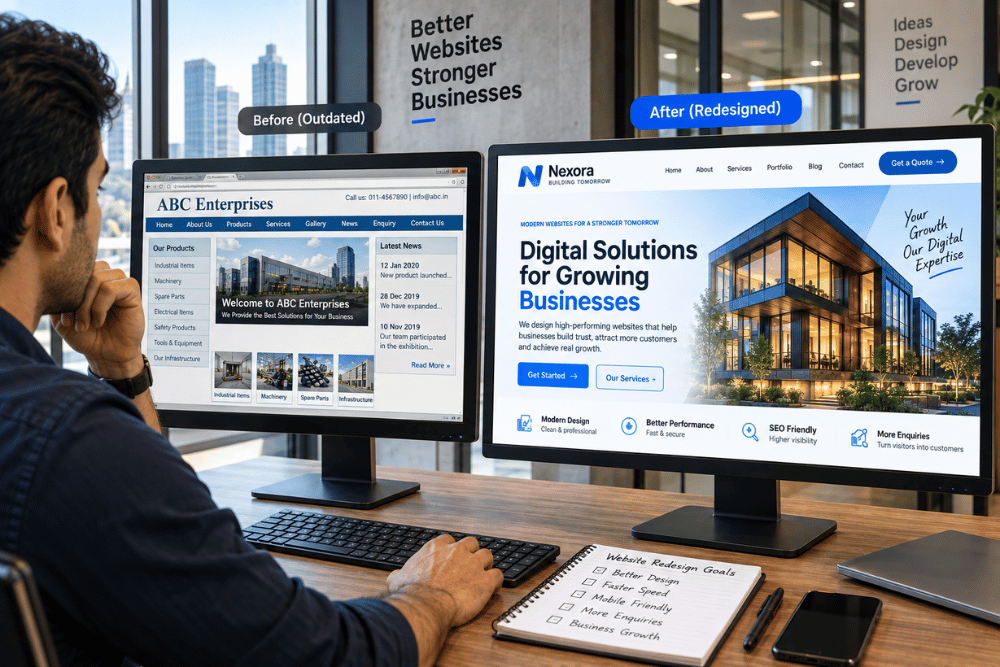
A business website can look perfectly fine to the company owner and still create problems for customers. Over time, websites can become slow, difficult to use on mobile devices, harder to update, or poorly organized as the business adds new services and content. What worked well when the website was first launched may no longer match the way customers search, browse, and contact businesses today. In some cases, the website is still technically working, but it is no longer doing its job effectively.
A website redesign is therefore not simply about giving an old website a new appearance. It is an opportunity to improve the parts of the website that affect how people use it, including page speed, mobile responsiveness, navigation, content structure, SEO, and enquiry flow. A redesign can also help bring the website in line with the current needs of the business, especially when services have changed, new pages are required, or the existing structure has become difficult to manage.
The important question is not whether your website looks old compared with newer websites. It is whether the current website is still helping your business. Slow pages, declining enquiries, poor mobile usability, confusing navigation, weak search visibility, and difficulty managing content can all be signs that the existing website needs attention. Understanding these warning signs can help you decide whether a redesign is appropriate or whether specific improvements to the existing website may be enough.
What Is Website Redesign and Why Does It Matter?
Many businesses think website redesign simply means changing colours, updating images, or making the homepage look more modern. In reality, a professional website redesign is much more than visual improvement. It focuses on improving the complete website experience, including structure, speed, mobile responsiveness, SEO performance, navigation, and customer interaction. The goal is not only to make the website look better, but also to help users understand the business, trust it more quickly, and take action without unnecessary confusion.
Today, customer expectations have changed significantly. Users expect websites to load quickly, work smoothly on mobile devices, provide clear information, and feel easy to navigate. If visitors struggle to find services, contact details, pricing information, or enquiry options, they may leave and continue searching for another business online. This is why modern website redesign focuses heavily on user experience and performance rather than appearance alone. A redesigned website should make important information easier to find while giving visitors a smoother experience across different devices.
A properly redesigned website can also create a stronger foundation for Google visibility. Many older websites have outdated structures, poor mobile layouts, slow-loading pages, or weak SEO foundations that make them harder for both users and search engines to understand. During a redesign, businesses can improve website architecture, page structure, internal linking, speed, and content organization together. Understanding how website structure affects SEO and lead generation can also help businesses make better decisions when reorganizing their existing website.
Another major advantage of redesign is better lead generation. A modern website can guide users more naturally toward actions such as contacting the business, submitting an enquiry, exploring services, or making a purchase. Improving website speed optimization is one part of this process, but the overall result also depends on clear navigation, useful content, mobile usability, and well-placed calls to action. When these elements work together, website redesign becomes more than a visual upgrade—it creates a stronger business asset that can support customer experience, SEO, enquiries, and changing business requirements.
Signs Your Business Website Needs a Redesign
Many businesses continue using the same website for years because it still technically works. The pages open, the contact form functions, and the basic information is available, so there may not seem to be a strong reason to change anything. But a website can work technically while still becoming less useful for customers. As browsing habits, mobile usage, search expectations, and business requirements change, an older website can gradually lose its effectiveness without the business owner noticing immediately. A website redesign becomes worth considering when these problems start affecting how visitors use the website or how easily the business can manage and grow its online presence.
There are several practical signs that can indicate the existing website needs an upgrade:
Slow page loading that makes visitors wait or leave
Poor mobile experience on smartphones and tablets
Outdated design that no longer represents the business professionally
Confusing navigation that makes important information difficult to find
Declining enquiries or conversions despite receiving website traffic
Weak SEO performance or a website structure that is difficult for search engines to understand
Difficulty updating or expanding the website as services, content, or business requirements change
These signs do not always mean that the entire website needs to be rebuilt immediately. For example, a website with a good technical foundation may only require improvements to its design, content structure, speed, mobile experience, or navigation. However, when several of these problems appear together, continuing to make small fixes may become less practical than planning a proper redesign. It is also worth paying attention to changes in your business. If you have added new services, expanded into new locations, started focusing more on SEO, or need better enquiry functionality, the existing website may no longer be structured around your current goals. A well-planned redesign can bring the website back in line with the way your business operates while creating a better experience for customers.
Why Business Websites Stop Performing Over Time
A website that performed well a few years ago may not deliver the same results today. Customer expectations, browsing habits, technology, and search practices continue to change, so a website that once felt modern can gradually become slow, difficult to use, or harder to manage. This does not necessarily mean that something has suddenly gone wrong. In many cases, the decline happens slowly as the website falls behind the needs of its customers and the way the business operates.
Several factors can contribute to a website becoming less effective over time:
Outdated design and page layouts
Slower loading and technical performance
Poor experience on mobile devices
Old or difficult-to-manage technology
Weak or outdated content and SEO structure
Business requirements that the existing website cannot support
The problem often becomes noticeable when the website is still functioning but the results are changing. Visitors may spend less time on important pages, enquiries may become less consistent, or customers may find it harder to reach the information they need. At the same time, a business may have added new services, changed its target audience, expanded into new locations, or started focusing more seriously on SEO and online enquiries. An old website structure may simply not be flexible enough to support these changes. Regular website maintenance can help keep an existing website secure, updated, and functional, but maintenance alone may not solve deeper problems with design, structure, usability, or outdated technology. When several of these issues appear together, a properly planned redesign can bring the website back in line with current customer expectations and business requirements.
How Website Redesign Improves SEO and Lead Generation
A website redesign gives a business the chance to fix problems that may have built up over several years. Older websites often have pages added at different times, inconsistent navigation, outdated content, weak internal connections, and layouts that were never properly planned for mobile users. Redesigning the website allows these elements to be reviewed together and reorganized around how customers actually search for information and move through the website. Instead of simply changing the colours or homepage design, the focus can be placed on creating a clearer structure where important services, useful content, and contact options are easier to discover.
SEO and lead generation also depend on what happens after a visitor reaches the website. A business may receive visitors from Google but still generate few enquiries if the pages are difficult to understand or there is no clear next step. During a redesign, the website can be structured so that visitors can move naturally from learning about a service to taking action. Important improvements may include:
Better organization of service and information pages
Clearer navigation and user flow
Improved mobile experience
Faster and more efficient page performance
Stronger internal page relationships
Clearer enquiry and conversion points
When these improvements are planned together, the website becomes easier for both customers and search engines to understand. A redesign does not automatically guarantee higher rankings or more leads, but it can remove technical and usability problems that make SEO and conversion efforts less effective. It also gives the business a cleaner foundation for adding new services, publishing useful content, improving search visibility, and making further changes as customer and business requirements evolve.
Redesign vs New Website: Which Option Is Better for Your Business?
Many business owners get confused about whether they should redesign their existing website or build a completely new one. Both options can improve the online experience, but they involve different levels of work. A redesign usually makes sense when the existing website has a usable foundation but needs improvements in design, mobile responsiveness, speed, navigation, content structure, or SEO. A completely new website may be more suitable when the current technology is outdated, the structure has major limitations, or the business needs functionality that the existing system cannot support properly.
The decision should not be based only on how old the website looks. Before choosing an approach, it is important to review the existing website's technical foundation, SEO performance, functionality, content, and ability to support future requirements. A website may look outdated but still have useful pages and search visibility worth preserving, while another website may look acceptable but have technical limitations that make further development difficult.
Quick Comparison: Website Redesign vs New Website
Website Redesign
New Website Development
Improves the existing website
Builds the website from the ground up
Suitable when the current foundation is usable
Suitable when the existing foundation has major limitations
Focuses on design, UX, speed, and structure improvements
Allows complete restructuring of design, technology, and functionality
Can preserve useful existing pages and SEO elements
Requires careful SEO migration and URL planning
Usually involves less development than a complete rebuild
Usually requires more planning and development
Useful for modernizing an existing business website
Useful for businesses with major new requirements
Can improve navigation and content organization
Allows new systems and workflows to be developed
Existing functionality may be retained or upgraded
Functionality can be planned from the beginning
Suitable when changes are mainly improvements
Suitable when the website needs a fundamentally different setup
A redesign can be a practical option when the website already has a solid foundation but needs a better visual experience, faster performance, improved mobile usability, clearer navigation, or better-organized content. It can also allow a business to improve the website without replacing every existing element. However, if the website depends on outdated technology, has serious structural problems, or cannot handle the functionality the business now requires, rebuilding may make more sense. In either situation, existing URLs, useful content, search visibility, and important functionality should be reviewed before major changes are made.
Technology is another factor to consider when a new website is being planned. If the business needs greater control over functionality, custom workflows, or how different parts of the website operate, the development approach becomes important. Businesses comparing different technologies can also explore PHP vs WordPress before deciding how the new website should be developed. The final decision should come from the condition of the existing website and the actual requirements of the business, rather than simply choosing a redesign or rebuild because it appears more modern.
How to Plan a Website Redesign
A successful website redesign starts before any new design is created. Instead of immediately changing the homepage, businesses should first understand what is working on the current website and where the real problems are. Some pages may already be bringing visitors from Google, while certain service pages, contact forms, or content may still be useful to customers. Reviewing the existing website first helps prevent valuable information from being removed unnecessarily and gives the redesign a clear starting point.
Before development begins, it is useful to review a few important areas:
Review the existing website and identify its main problems
Keep valuable pages and content that still serve customers or attract search traffic
Check existing URLs and SEO elements before making structural changes
Define the main business and customer goals for the redesigned website
Plan the new page structure and navigation around those goals
Prepare updated content and redirects where pages or URLs will change
Test the redesigned website across mobile, desktop, forms, links, and important functions before launch
Once these points are clear, the new website can be planned around actual business requirements rather than design trends alone. The page structure should make important services easy to find, the content should answer the questions customers are likely to have, and important actions such as enquiries, bookings, or purchases should have a clear path. It is also important to decide which existing pages should be improved, combined, moved, or removed before development starts, because making these decisions late in the project can create unnecessary work and SEO problems.
The final stage is testing the redesigned website before it goes live. Check that important pages open correctly, redirects work where required, forms are submitting properly, content displays well on mobile devices, and there are no broken links or obvious performance issues. A redesign should be treated as a structured website improvement project, not simply a change of appearance. Taking time to plan each stage properly makes the transition smoother and gives the new website a stronger foundation for future updates, SEO work, and business growth.
Common Website Redesign Mistakes That Affect SEO and Business Growth
A website redesign can improve the way a business looks and performs online, but only when the existing website is handled carefully. One common mistake is to treat redesign as a purely visual project and focus most of the attention on colours, layouts, images, and animations. Important pages may be removed, content may be shortened, navigation may be changed, or technical elements may be overlooked during the process. The new website can look much better while still creating problems for users and search engines. A successful redesign should therefore consider what is already working on the website before making major changes.
Another major problem occurs when businesses change the website structure without properly planning the transition. URLs may be changed, old service pages may disappear, internal links may become broken, or important content may be moved without considering its existing search visibility. Before launching the redesigned website, businesses should review areas such as:
Important existing pages and URLs
Existing search traffic and useful content
Mobile responsiveness and page speed
Internal links between related pages
Redirects for changed or removed URLs
Page titles, headings, and other SEO elements
Forms, enquiry paths, and important functionality
These details matter because a website redesign should improve the existing experience rather than accidentally remove useful parts of it. For example, deleting a service page that already receives search traffic may create an unnecessary SEO problem, while changing several URLs without redirects can leave visitors and search engines reaching outdated addresses. Businesses should also review website structure before reorganizing pages, particularly when the redesign involves adding new services, combining existing pages, or changing the main navigation.
Another mistake is making the redesigned website heavier in an attempt to make it look more impressive. Large images, unnecessary animations, excessive scripts, and complicated features can affect loading speed and make the website harder to use, especially on mobile connections. At the same time, removing too much content simply to create a cleaner design can make important services or information harder to understand. The redesign should find a practical balance between appearance, performance, useful content, SEO, and conversion paths so that the new website is not only more modern, but also more useful to the people who visit it.
A careful redesign process should therefore begin with an assessment of the existing website rather than immediately replacing everything. Understanding which pages, content, technical elements, and user journeys are already valuable makes it easier to decide what should be improved, retained, redirected, or rebuilt. This approach helps the redesigned website move forward without unnecessarily losing the work and visibility the business has already developed.
Final Thoughts
A business website can work technically and still fail to deliver the experience customers expect. Slow loading, poor mobile usability, confusing navigation, outdated content, and declining enquiries are all signs that the website may need more than small updates. A redesign gives businesses an opportunity to improve these areas while making the website more closely aligned with their current goals and customer needs.
The right redesign is not simply about making a website look newer. It should improve usability, performance, content structure, SEO foundations, and the path customers take toward an enquiry or purchase. Before making major changes, review the existing website carefully and decide what should be improved, retained, redirected, or rebuilt. With proper planning, a website redesign can create a stronger foundation for customer experience, search visibility, and future business growth.
A website may need a redesign when it looks outdated, loads slowly, works poorly on mobile devices, has confusing navigation, or no longer supports the way your business operates. Declining enquiries, weak engagement, and difficulty updating content can also indicate that the existing website needs improvement.
A properly planned redesign can create a stronger SEO foundation by improving website structure, page speed, mobile responsiveness, internal linking, navigation, and content organization. However, a redesign by itself does not guarantee higher Google rankings; SEO improvements depend on the quality of the technical, content, and optimization work carried out during the project.
It can if important URLs, content, internal links, or technical elements are changed without proper planning. Maintaining relevant URLs where possible, setting appropriate redirects, preserving useful content, and checking technical SEO before and after launch can help protect existing search visibility during a redesign.
The timeline depends on the website's size, number of pages, design requirements, functionality, content, and technical changes involved. A relatively small business website may require less development time, while larger websites with custom features, extensive content, or SEO work can take considerably longer.
A website redesign can improve mobile usability, page speed, navigation, visual presentation, content organization, SEO structure, and the overall customer experience. It can also make the website easier to maintain and better suited to new services, marketing activities, and business requirements.
The right option depends on the condition of the existing website. If its technical foundation and structure are still suitable, a redesign may be enough to improve its appearance, performance, and usability. If the website uses outdated technology or has major structural and functionality limitations, rebuilding it may be more practical.
Grow Your Local Business
Get a Professional Website From a Web Designing Company in Delhi