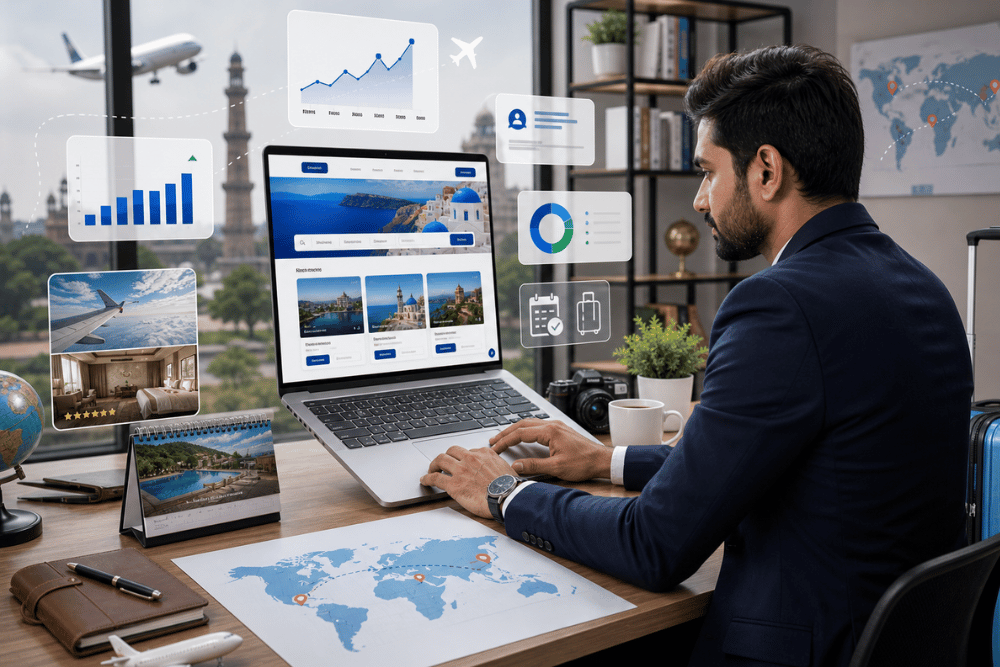
The way people plan holidays and business trips has changed dramatically. Today, most travellers begin their journey on Google, comparing destinations, travel packages, tour operators, and customer reviews long before they contact a travel agency. Whether someone is searching for a domestic holiday, an international tour, a honeymoon package, or visa assistance, the businesses with a professional online presence are usually the ones that receive the first enquiries.
For travel agencies, tour operators, and travel consultants, a website has become much more than an online brochure. It is a powerful business asset that showcases travel packages, builds customer confidence, explains services clearly, and helps convert interested visitors into genuine enquiries. A professionally developed travel website also supports search visibility, strengthens your brand, and gives customers an easy way to explore destinations, compare packages, and contact your business from any device.
As competition continues to grow, businesses need more than an attractive design to stand out online. They need a website that is fast, mobile-friendly, easy to navigate, and built around how travellers search and make booking decisions. Working with a professional Travel Website Design Company in Delhi helps travel businesses create websites that not only look professional but also improve visibility, generate enquiries, and support long-term growth. In this article, we'll explore what makes an effective travel agency website, the features it should include, and how the right website can help your business attract more customers and increase bookings.
Why Travel Agencies Need a Professional Website to Increase Bookings
The travel industry is built on trust, information, and customer confidence. Unlike many other purchases, booking a holiday package, honeymoon, international tour, or business trip usually involves careful research before any enquiry is made. Most travellers compare multiple travel agencies, explore destinations, review tour itineraries, check package inclusions, compare prices, and read customer reviews before deciding who to trust with their travel plans. A professional travel website supports this entire decision-making process by presenting accurate, organised, and easy-to-understand information that helps potential customers move forward with confidence.
Today's travellers expect much more than a phone number or a social media page. They want detailed destination information, complete package descriptions, transparent pricing, travel schedules, visa assistance details, cancellation policies, frequently asked questions, and genuine customer testimonials before contacting a business. When this information is available in one organised place, visitors spend more time exploring your services instead of returning to Google to compare another agency. This improves customer confidence while creating a smoother path from the first website visit to the final booking enquiry.
Relying only on social media platforms or third-party travel marketplaces also limits long-term business growth. Although these channels can help customers discover your business, they offer very little control over branding, customer experience, or lead generation. A professionally designed travel website gives your business complete ownership of its online presence. You can organise domestic and international tour packages, highlight seasonal offers, showcase destination galleries, explain your booking process, collect enquiries directly, and communicate your brand without depending on changing platform algorithms or marketplace competition. This creates a stronger customer experience while helping your business build its own online authority.
A professional travel website also becomes one of your strongest trust-building tools. Since travel services are purchased before customers experience them, reducing uncertainty is essential. Detailed itineraries, destination galleries, customer testimonials, secure enquiry forms, clear contact information, and transparent package details reassure visitors that they are dealing with a genuine and reliable travel agency. Every page works together to answer common questions, remove hesitation, and strengthen confidence before the customer ever speaks to your team.
Perhaps the greatest advantage is that your website continues generating business long after your office closes. Potential travellers can browse destinations, compare travel packages, request quotations, and submit enquiries at any time from anywhere. Instead of relying only on office hours, referrals, or social media messages, your website works as a dedicated sales and enquiry platform that attracts visitors, builds trust, and captures new business around the clock. Over time, this creates a consistent system for generating qualified enquiries, increasing bookings, and supporting sustainable growth for your travel business.
Features Every Travel Website Should Have
A successful travel website is more than an attractive design—it is a business tool designed to attract visitors, build trust, and convert enquiries into bookings. Before choosing a travel agency, customers often compare multiple websites to evaluate tour packages, destinations, pricing, reviews, and the overall professionalism of the business. If important information is missing or the website is difficult to navigate, potential customers are likely to leave and continue their search elsewhere. A well-designed travel website removes these barriers by making the booking journey simple, informative, and user-friendly.
The most effective travel websites combine strong user experience with features that help customers make informed decisions. Every element should support a specific purpose, whether it is improving search visibility, building confidence, or making it easier for visitors to contact your business. The table below highlights the essential features every travel website should include.
Website Feature
Why It Matters
Detailed Tour Package Pages
Help customers understand itineraries, pricing, inclusions, and trip details before making an enquiry.
Destination Pages
Improve SEO while showcasing destinations and attracting travellers searching for specific locations.
Booking & Enquiry Forms
Make it easy for visitors to request quotations or enquire about travel packages.
WhatsApp Integration
Enables instant communication and faster responses to customer enquiries.
Customer Reviews & Testimonials
Build trust by showcasing real travel experiences and customer satisfaction.
Mobile-Friendly Design
Ensures a smooth browsing experience across smartphones, tablets, and desktops.
Contact Information
Makes it simple for customers to call, email, or visit your travel agency.
Destination Gallery
Inspires travellers with high-quality images that encourage enquiries and bookings.
While these features create the foundation of a high-performing travel website, their effectiveness depends on how they are planned and implemented. If you'd like a detailed explanation of how each feature improves customer experience, SEO, and booking conversions, read Features Every Travel Website Should Have for Better Bookings. A travel website that combines these essential elements with a clear user journey is far more likely to generate enquiries, strengthen customer trust, and support long-term business growth.
Why Custom Travel Websites Perform Better Than Ready-Made Templates
Every travel business operates differently. Some agencies specialise in domestic holiday packages, while others focus on international tours, visa assistance, corporate travel, pilgrimage tours, educational trips, or customised travel experiences. Because every travel business has its own services, booking process, and target audience, a generic website template rarely provides the flexibility required for long-term growth. Although ready-made templates may appear to be a quicker and more affordable option, they are built for general businesses rather than the unique requirements of a travel agency.
A custom travel website is designed around how your business actually works. Instead of forcing your services into a fixed layout, every page is planned to support your customer's journey—from discovering destinations and exploring tour packages to submitting enquiries and requesting quotations. Tour itineraries, destination pages, seasonal offers, booking forms, payment options, travel galleries, and customer communication can all be organised in a way that feels natural and easy to navigate. This creates a better user experience while helping visitors find the information they need without confusion.
Custom development also provides significant long-term advantages for SEO, performance, and scalability. As your travel business grows, you may want to add new destinations, publish travel guides, launch promotional landing pages, or integrate advanced booking features. A custom-built website allows these improvements without being restricted by the limitations of a pre-built template. Better website architecture, cleaner code, faster loading speed, and greater flexibility create a stronger foundation for higher search visibility, improved user experience, and consistent enquiry generation.
The differences become even clearer when comparing both approaches side by side.
Feature
Ready-Made Template Website
Custom Travel Website
Business Fit
Built for general businesses with limited flexibility.
Designed specifically around your travel business and customer journey.
Tour Package Pages
Fixed layouts with limited customization.
Fully customised pages for tour packages, itineraries, destinations, and seasonal offers.
SEO Performance
Basic SEO options with structural limitations.
SEO-friendly architecture, clean code, and optimised page structure for better rankings.
Booking & Enquiry System
Generic enquiry forms with limited functionality.
Custom enquiry forms, quotation requests, WhatsApp integration, and booking workflows.
Website Speed
Often includes unnecessary code that slows performance.
Optimised for faster loading, better Core Web Vitals, and improved user experience.
Scalability
Difficult to expand as business requirements grow.
Easily supports new destinations, services, landing pages, and advanced features.
Brand Identity
Generic layouts used by many businesses.
Unique design that reflects your travel brand and builds stronger customer trust.
Long-Term Value
Lower upfront cost but limited future flexibility.
Greater long-term value with better performance, scalability, and business growth potential.
While a ready-made template may reduce the initial development cost, it often becomes restrictive as your business expands. A custom travel website gives you complete control over branding, functionality, SEO, and future growth, making it a smarter long-term investment. Rather than simply creating an online presence, it provides a scalable digital platform that helps attract more qualified visitors, improve customer trust, generate consistent enquiries, and support sustainable business growth.
How Travel Websites Help Increase Bookings
A professionally designed travel website does much more than showcase destinations and holiday packages—it helps convert interested visitors into paying customers. Every traveller follows a decision-making journey before booking a trip. They compare multiple travel agencies, explore destinations, review itineraries, check package inclusions, read customer reviews, and evaluate which company appears the most trustworthy. A well-structured travel website supports every stage of this journey by providing the right information at the right time, making it easier for visitors to move from research to enquiry.
One of the biggest advantages of a professional travel website is that it removes uncertainty. Instead of asking customers to call for basic information, the website answers common questions through detailed package pages, destination information, pricing, travel schedules, FAQs, and clear enquiry options. The easier it is for visitors to understand your services, the more confident they feel about contacting your agency. This improved user experience not only increases enquiries but also helps attract higher-quality leads because customers already have a clear understanding of what you offer before reaching out.
Unlike a physical office, your website works continuously without business hours or geographical limitations. Potential travellers can explore destinations, compare travel packages, request quotations, and submit enquiries whenever they are planning their next trip, whether it is early in the morning, late at night, or during weekends. This allows your business to capture opportunities that would otherwise be missed while creating a consistent flow of enquiries throughout the day.
However, simply having a website is not enough. Slow loading pages, outdated package information, confusing navigation, or complicated enquiry forms can discourage visitors before they take action. A successful travel website is designed to make every step simple, from discovering travel packages to requesting a quotation. If you'd like to learn more about the strategies that improve enquiry rates and online bookings, you can also read How Travel Websites Generate More Bookings, where we explain the customer journey, conversion principles, and website elements that contribute to better booking performance in greater detail.
Travel Website Development Process
Developing a successful travel website involves much more than designing attractive pages. It requires a strategic approach that combines business goals, customer behaviour, user experience, and SEO into a single platform that encourages enquiries and bookings. Since travellers typically compare multiple destinations, tour packages, and travel agencies before making a decision, every stage of the development process should be planned around how customers search, evaluate, and book travel services online.
The process begins with understanding your travel business, target audience, and the services you offer. Whether your business specialises in domestic tours, international holiday packages, visa assistance, corporate travel, adventure tourism, or customised travel experiences, the website should be structured to present this information clearly and logically. A well-planned website architecture helps visitors explore destinations, compare packages, and submit enquiries without confusion, creating a smoother customer journey from the first visit to the final booking.
Once the planning stage is complete, design and development begin with a strong focus on performance, mobile responsiveness, and usability. Essential features such as destination pages, detailed tour packages, enquiry forms, quotation requests, WhatsApp integration, image galleries, testimonials, and secure contact options are incorporated while ensuring the website remains fast, user-friendly, and easy to manage. Businesses interested in understanding this workflow in greater detail can also explore the Website Development Process, where each stage of professional website planning, design, development, testing, and deployment is explained step by step. Implementing SEO-friendly URLs, structured navigation, and technical optimisation from the beginning also creates a stronger foundation for long-term search visibility.
Before launch, the website is thoroughly tested across different devices, browsers, and screen sizes to ensure every page functions correctly. Performance, security, enquiry forms, and user interactions are carefully reviewed to deliver a reliable experience for both visitors and search engines. A professionally managed development process creates a travel website that not only looks modern but also improves customer trust, supports long-term SEO, and generates consistent enquiries as your business continues to grow.
Travel Website Design Cost in Delhi
The cost of a travel website depends on your business goals, the features you need, and the level of customisation required. Every travel business operates differently, so there is no fixed price that applies to every project. A small travel agency may only require a professional website to showcase tour packages and collect enquiries, while a larger travel company may need advanced features such as online booking systems, payment gateway integration, customer dashboards, dynamic package management, and destination-based landing pages.
Several factors influence the overall development cost, including custom design, the number of pages, booking functionality, mobile responsiveness, SEO optimisation, third-party integrations, content management capabilities, and future scalability. Investing in a custom-built website usually requires a higher initial budget than using a template, but it provides greater flexibility, better performance, and a stronger foundation for long-term business growth. If you would like to understand how these factors affect pricing in more detail, you can also read How Much Does Website Designing Cost, where we explain the key cost considerations, pricing models, and what businesses should evaluate before investing in a professional website.
Rather than viewing website development as a one-time expense, it should be considered a long-term investment in your business. A professionally developed travel website improves search visibility, strengthens customer trust, generates qualified enquiries, and supports future digital marketing efforts. Choosing the right website from the beginning is often more cost-effective than rebuilding or redesigning it later, making it a valuable asset that continues supporting your travel business as it grows.
Why SEO Matters for Travel Websites
A professionally designed travel website delivers results only when potential customers can find it. This is where SEO becomes one of the most valuable investments for any travel business. Every day, travellers search Google for holiday packages, tour operators, visa services, honeymoon packages, international tours, and destination-specific travel solutions. Appearing in these search results allows your business to connect with customers at the exact moment they are planning a trip or looking for a travel agency.
Unlike paid advertising, SEO focuses on building long-term visibility. A well-optimised travel website helps search engines understand your services, destinations, and target locations, making it easier to rank for relevant searches over time. Well-structured destination pages, travel package pages, informative content, and technical optimisation work together to attract qualified visitors who are actively searching for the services you offer. This not only increases website traffic but also improves the quality of enquiries because visitors already have a genuine interest in travelling.
For travel businesses operating in a competitive market like Delhi, stronger search visibility creates a significant business advantage. The more relevant searches your website appears for, the more opportunities you have to generate enquiries, increase bookings, and grow your brand organically. A professionally optimised travel website becomes more than a marketing tool—it becomes a long-term source of consistent, high-intent leads.
Why Mobile-Friendly Travel Websites Generate More Bookings
Most travellers now research destinations, compare travel packages, and submit enquiries using their smartphones. Whether they are planning a holiday during a lunch break, browsing tour packages while commuting, or comparing travel agencies from home, they expect websites to load quickly and work perfectly on every screen size. If your website is slow, difficult to navigate, or poorly optimised for mobile devices, many visitors will leave before exploring your services.
A mobile-friendly travel website makes it easy for users to browse destinations, compare packages, view itineraries, request quotations, and contact your business without unnecessary effort. Clear navigation, fast-loading pages, clickable phone numbers, simple enquiry forms, and responsive layouts create a smoother customer experience that encourages visitors to stay longer and complete an enquiry. Since travel bookings often involve multiple comparisons before a decision is made, delivering a seamless mobile experience can significantly improve customer confidence and conversion rates.
Website speed is equally important because even small delays can increase visitor drop-offs and reduce engagement. Businesses that want to improve loading performance and user experience can also explore Website Speed Optimization, where practical techniques for building faster, more efficient websites are explained in greater detail. By combining responsive design with strong performance, a mobile-friendly travel website improves customer satisfaction, supports SEO, and creates more opportunities to convert visitors into genuine travel enquiries.
Common Website Mistakes That Reduce Travel Bookings
Many travel agencies invest in a website but still struggle to generate consistent enquiries because the website fails to support how travellers research and make booking decisions. A travel website should make it easy for visitors to compare packages, understand destinations, build confidence, and contact your business. When important information is missing or the user experience is poor, potential customers often leave the website and continue searching for another travel agency. In a competitive industry where customers compare several businesses before making a decision, even small website issues can have a direct impact on enquiries and bookings.
Some of the most common mistakes include incomplete tour package pages, outdated website design, slow loading speed, poor mobile responsiveness, confusing navigation, weak calls-to-action, and missing trust signals such as customer reviews or testimonials. Many travel businesses also make the mistake of hiding contact information or creating complicated enquiry forms, making it difficult for potential customers to take the next step. Since travel bookings involve financial commitment and careful planning, visitors expect a website that feels professional, informative, and easy to use from the moment they arrive.
Avoiding these mistakes creates a better customer experience while improving search visibility and conversion rates. A well-structured travel website gives visitors the confidence to explore destinations, compare travel packages, request quotations, and contact your business without hesitation. The easier it is for customers to find information and trust your services, the more likely they are to become genuine enquiries and future bookings.
How a Professional Travel Website Builds Customer Trust
Trust is one of the most important factors influencing travel bookings because customers often pay for services weeks or even months before their journey begins. Unlike purchasing a physical product, travellers are investing in an experience they have not yet received, making credibility a critical part of the decision-making process. A professionally designed travel website helps reduce this uncertainty by presenting clear, organised, and transparent information that allows visitors to evaluate your business with confidence.
A trustworthy travel website includes detailed tour packages, destination information, transparent pricing, customer testimonials, travel galleries, frequently asked questions, secure enquiry forms, and clearly visible contact details. These elements work together to answer common questions, demonstrate your experience, and reassure potential customers that they are dealing with a genuine and reliable travel agency. Instead of searching across multiple platforms for information, visitors can find everything they need in one place, creating a smoother and more confident booking journey.
Professional design also influences how customers perceive your business. A modern, fast, and well-organised website reflects professionalism, while outdated layouts, broken pages, or incomplete information can create unnecessary doubt. Every interaction—from browsing destinations to submitting an enquiry—contributes to building confidence in your brand. Over time, a website that consistently delivers a positive user experience becomes more than a marketing tool; it becomes one of your strongest assets for earning customer trust, increasing enquiries, and generating long-term business growth.
Closing Thoughts
A professional travel website is no longer just a marketing asset—it has become one of the most important drivers of business growth for modern travel agencies. From improving search visibility and building customer trust to showcasing tour packages and generating qualified enquiries, every element of your website influences how potential travellers perceive your business. In an industry where customers compare multiple agencies before making a booking decision, a well-planned website can often become the difference between winning a customer and losing them to a competitor.
Long-term success depends on much more than attractive design. A travel website should be fast, mobile-friendly, SEO-ready, easy to navigate, and built around the way travellers research, compare, and book their trips. When these elements work together, your website becomes a powerful platform for attracting high-intent visitors, increasing enquiries, and supporting consistent business growth.
If you're looking to establish a stronger online presence, generate more travel enquiries, and create a website that supports your business for years to come, partnering with an experienced Travel Website Design Company in Delhi can help you build a professional website that combines outstanding user experience, search visibility, and long-term business performance.
A professional travel website helps customers explore destinations, compare tour packages, submit enquiries, and build confidence before booking. It also improves Google visibility and supports long-term business growth.
A travel website should include tour package pages, destination pages, enquiry forms, WhatsApp integration, customer reviews, mobile-friendly design, SEO-friendly structure, and secure contact options to improve user experience and conversions.
Yes. A well-designed travel website makes it easier for customers to compare packages, understand your services, and contact your agency. Clear information and a smooth user journey often lead to more qualified enquiries.
The cost depends on your website's size, design, booking functionality, custom features, and development requirements. Simple enquiry websites generally cost less than advanced travel booking portals.
Yes. SEO helps your travel website appear when people search for travel agencies, holiday packages, and tour services. Better visibility attracts more targeted visitors and creates consistent enquiry opportunities.
A custom travel website is designed around your business, making it easier to showcase tour packages, improve SEO, strengthen branding, and provide a better customer experience than a generic template.
Grow Your Local Business
Get a Professional Website From a Web Designing Company in Delhi